ESE Lightning Arresters: Working Principle and Protection
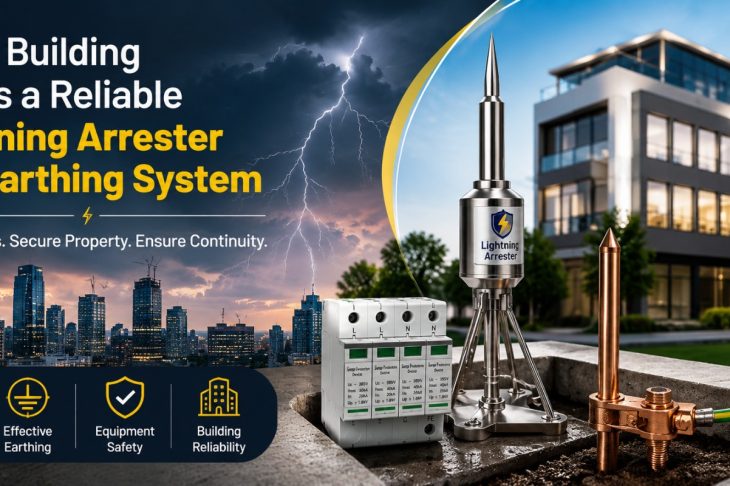
Lightning is one of nature’s most powerful electrical phenomena, capable of releasing millions of volts within a fraction of a second. A single lightning strike can damage buildings, disrupt business operations, destroy expensive electrical equipment, trigger fires, and even threaten human safety. As industries become increasingly dependent on sophisticated electrical and electronic systems, investing in a reliable lightning protection solution is no longer optional—it’s essential.
This is where ESE lightning arresters have transformed modern lightning protection. Unlike traditional systems that simply provide a preferred path for lightning current, Early Streamer Emission (ESE) technology is engineered to initiate an upward streamer under specific electrical conditions, helping intercept lightning within its designed protection zone before it reaches the protected structure.
Whether you’re an industrial facility owner, electrical consultant, architect, contractor, or facility manager, understanding the working principle of ESE lightning arresters will help you choose the right protection system for your building.
In this comprehensive guide, you’ll learn:
- What an ESE lightning arrester is
- How it works step by step
- Why it differs from conventional lightning rods
- Where it is commonly installed
- The importance of proper lighting arrester installation
- Why it is considered one of the most effective lightning arresters for modern infrastructure
How Does an ESE Lightning Arrester Work?
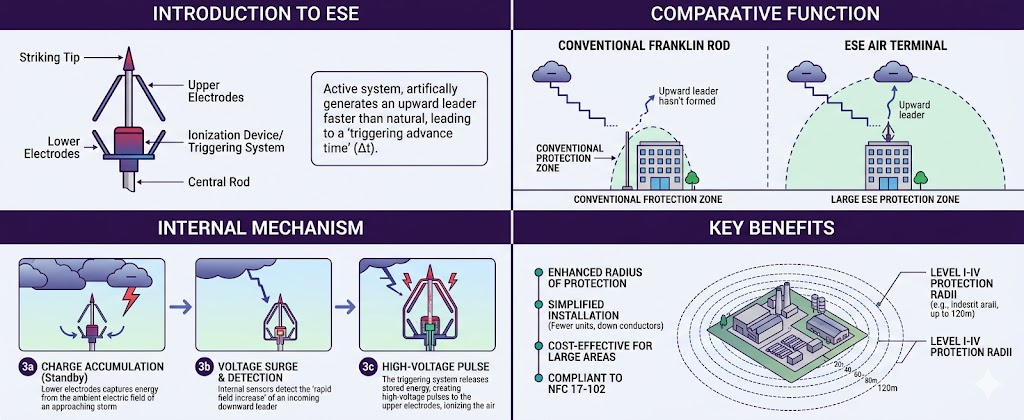
An ESE lightning arrester is an advanced external lightning protection device that is installed at the highest point of a structure. As atmospheric electrical conditions intensify during a thunderstorm, the device is designed to initiate an upward streamer earlier than nearby objects under specified operating conditions. If this streamer connects with the descending lightning leader, the lightning current follows the intended path through the down conductor and earthing system, where it is safely dissipated into the ground.
When supported by proper lighting arrester installation, low-resistance earthing, and routine maintenance, an ESE system helps reduce the risk of direct lightning damage to buildings, equipment, and critical infrastructure.
ESE Lightning Arrester at a Glance
|
Feature |
Details |
|---|---|
|
Technology |
Early Streamer Emission (ESE) |
|
Primary Purpose |
Protect structures from direct lightning strikes |
|
Installation Location |
Highest point of the structure |
|
Working Principle |
Initiates an early upward streamer under suitable electrical conditions |
|
Protection Method |
Safely conducts lightning current to the earth |
|
Suitable For |
Commercial buildings, industries, hospitals, telecom towers, airports, warehouses, data centres |
|
Maintenance |
Periodic inspection and earthing resistance testing |
|
Key Benefit |
Wider protection coverage with fewer air terminals in many applications |
What Is an ESE Lightning Arrester?
An ESE lightning arrester (Early Streamer Emission Lightning Arrester) is an advanced lightning interception device designed to protect structures from the damaging effects of direct lightning strikes.
Installed at the highest point of a building, it works with down conductors and an engineered earthing system to provide a controlled path for lightning energy to travel safely into the ground.
Unlike ordinary lightning rods, an ESE device incorporates a specialised triggering mechanism that is designed to initiate an upward streamer earlier than surrounding objects under high electric field conditions. This operating principle can increase the effective protection area when the system is designed according to recognised standards and installed correctly.
Today, lightning arresters using ESE technology are widely used in industrial facilities, commercial complexes, healthcare institutions, logistics parks, airports, power plants, and telecommunications infrastructure where dependable lightning protection is essential.
Why Are ESE Lightning Arresters Becoming More Popular?
Modern buildings are larger, taller, and more dependent on sensitive electrical systems than ever before. A single lightning strike can interrupt operations, damage electronic equipment, and lead to expensive repairs.
As a result, many engineers specify ESE lightning arresters because they offer several practical advantages:
- Wider protection coverage for large facilities
- Fewer air terminals may be required compared to conventional systems
- Simplified protection for complex structures
- Compatibility with comprehensive lightning protection systems
- Long service life with periodic maintenance
However, the effectiveness of any system depends on professional design, correct lighting arrester installation, and a properly engineered earthing network.
How Does an ESE Lightning Arrester Work? (Step-by-Step)
Understanding the working principle is easier when the process is broken into individual stages.
Step 1: Formation of an Electrical Storm
As thunderclouds develop, collisions between water droplets and ice particles generate electrical charges inside the cloud.
Over time, a strong electric field forms between the cloud and the ground. This field increases continuously as the storm intensifies.
When the electric field reaches a sufficiently high level, conditions become favourable for a lightning discharge.
Step 2: The ESE Device Detects High Electrical Field Conditions
An ESE lightning arrester continuously experiences the surrounding atmospheric electric field.
As the electric field strength increases during a thunderstorm, the device becomes electrically active according to its design characteristics.
At this stage, no lightning has yet struck the structure.
Instead, the arrester prepares to initiate the interception process if conditions are met.
Step 3: Early Streamer Initiation
This is the defining feature of ESE technology.
Under high electric field conditions, the arrester is designed to initiate an upward electrical streamer slightly earlier than nearby objects.
An upward streamer is an ionised path extending from the arrester toward the descending lightning leader.
Because this upward streamer forms at an earlier stage than it otherwise might, the ESE device can become the preferred interception point within its designed protection zone.
Step 4: Interception of the Lightning Strike
As the downward lightning leader approaches the ground, it searches for a conductive path to complete the electrical circuit.
If the upward streamer from the ESE device connects with the descending leader, the lightning discharge is intercepted by the arrester rather than by the protected structure.
Instead of allowing the strike to impact a roof, machinery, communication equipment, or other exposed assets, the system directs the current into the designed protection network.
Step 5: Safe Conduction through the Down Conductor
Once the lightning strike is intercepted, the enormous electrical current travels through dedicated down conductors.
These conductors are engineered to safely carry high lightning currents without causing dangerous side flashes or structural damage when installed in accordance with recognised engineering practices.
Maintaining continuous electrical conductivity throughout this path is one of the most important aspects of effective lighting arrester installation.
Step 6: Dissipation into the Earth
The final stage is the safe discharge of lightning energy into the earth.
A low-resistance earthing system disperses the electrical current over a large area of soil, reducing the risk of damage to the protected building and nearby electrical equipment.
Without a properly designed grounding system, even the most advanced ESE lightning arrester cannot deliver reliable protection.
For this reason, engineers consider the earthing network an equally critical component of the overall lightning protection system.
Components of an ESE Lightning Protection System
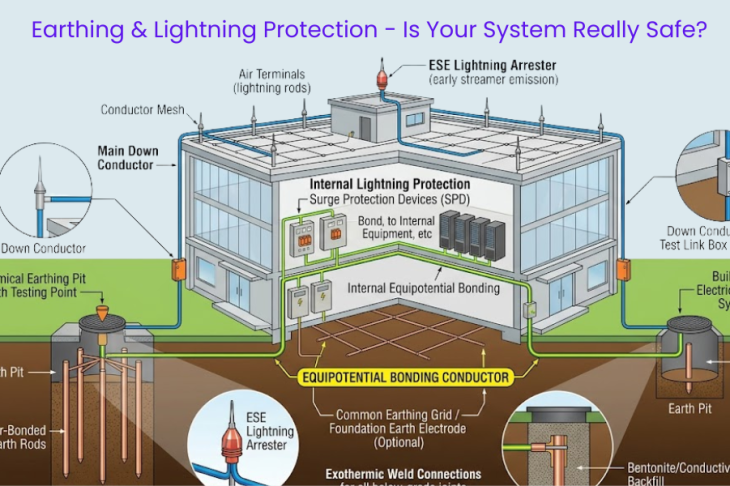
An ESE lightning arrester delivers reliable protection only when it functions as part of a complete lightning protection system. While the air terminal is the most visible component, every element plays a critical role in safely capturing and dissipating lightning energy. A weak or improperly installed component can reduce the overall effectiveness of the system.
The major components include:
1. ESE Air Terminal
The ESE air terminal is installed at the highest point of the structure. It is designed to initiate an upward streamer under suitable atmospheric conditions, helping intercept lightning within its intended protection zone.
2. Down Conductors
Down conductors create a dedicated path for lightning current to travel from the air terminal to the earthing system. These conductors are typically made of highly conductive materials such as copper or aluminium and should be routed with minimal bends to reduce electrical impedance.
3. Earthing System
The earthing system safely disperses lightning energy into the ground. Low earth resistance is essential for effective performance, making regular testing and maintenance an important part of any lightning protection programme.
4. Connectors and Clamps
High-quality connectors and clamps ensure secure electrical continuity throughout the system. They should be corrosion-resistant and capable of withstanding harsh environmental conditions.
5. Surge Protection Devices (SPDs)
Although an external lightning protection system intercepts direct strikes, voltage surges can still enter through power or communication lines. Installing SPDs helps protect sensitive electrical and electronic equipment from transient overvoltages.
ESE Lightning Arrester vs Conventional Lightning Rod
One of the most common questions asked by engineers and facility owners is how an ESE lightning arrester differs from a conventional lightning rod.
Both systems are designed to protect structures from lightning damage, but they follow different design approaches and are often selected based on project requirements.
|
Feature |
ESE Lightning Arrester |
Conventional Lightning Rod |
|---|---|---|
|
Protection Principle |
Early Streamer Emission technology |
Passive interception method |
|
Coverage Area |
Designed for wider protection zones |
Smaller protection area |
|
Number of Air Terminals |
Often fewer for large sites |
Usually multiple terminals |
|
Suitable Structures |
Large industrial and commercial facilities |
Residential and smaller buildings |
|
Installation Complexity |
Efficient for large projects |
May require a more extensive network |
Neither system is universally “better.” The right choice depends on factors such as building height, site conditions, risk assessment, and compliance with applicable standards. Consulting a qualified lightning protection specialist ensures the most suitable solution for your facility.
Why Proper Lighting Arrester Installation Is Essential
Even the most advanced lightning protection device cannot perform effectively without correct lighting arrester installation.
A professionally designed installation ensures that lightning energy follows a controlled path from the air terminal to the ground without damaging the structure or nearby electrical systems.
For optimal performance:
- Install the air terminal at the highest point of the building.
- Ensure down conductors follow the shortest practical route to the grounding system.
- Maintain low earth resistance through a properly designed earthing network.
- Avoid sharp bends or unnecessary joints in conductors.
- Inspect the system periodically for corrosion, loose connections, or physical damage.
Proper installation not only improves system reliability but also extends its service life and reduces long-term maintenance costs.
Key Benefits of ESE Lightning Arresters
Modern lightning arresters incorporating Early Streamer Emission technology offer several practical advantages, particularly for large commercial and industrial facilities.
Some of the key benefits include:
- Wider protection coverage for large structures.
- Reduced number of air terminals in many applications.
- Lower installation costs for extensive sites.
- Minimal maintenance when regularly inspected.
- Reliable protection for valuable infrastructure and electrical equipment.
- Suitable for diverse applications, including factories, warehouses, hospitals, airports, telecom towers, and data centres.
While these advantages make ESE systems a preferred choice for many projects, their effectiveness ultimately depends on professional design, quality components, and proper installation.
Applications of ESE Lightning Arresters
Because of their wider protection coverage, ESE lightning arresters are widely used across industries where reliable lightning protection is essential.
- Industrial Plants: Protect machinery, production lines, and electrical systems from lightning-related damage and downtime.
- Commercial Buildings: A lightning arrester for buildings helps safeguard offices, shopping malls, hotels, and business parks.
- Hospitals: Supports the protection of critical medical equipment and uninterrupted healthcare operations.
- Telecommunication Towers: Reduces the risk of damage to communication infrastructure and network equipment.
- Airports and Data Centres: Helps protect mission-critical facilities where electrical reliability is essential.
Maintenance Best Practices
The effectiveness of any lightning protection system depends on regular maintenance. A preventive maintenance schedule should include:
- Visual inspection of the air terminal and conductors.
- Earth resistance testing.
- Checking electrical continuity.
- Inspecting connectors and Surge Protection Devices (SPDs).
- Replacing damaged or corroded components when required.
Frequently Asked Questions
What is the working principle of an ESE lightning arrester?
It initiates an upward streamer under high electric field conditions, providing a preferred interception point for lightning and safely directing the current into the grounding system.
Where a lightning arrester for buildings should be installed?
At the highest point of the structure, with a properly designed earthing system and professional lighting arrester installation.
Do ESE lightning arresters require maintenance?
Yes. Periodic inspections and earthing tests help maintain reliable performance.
Conclusion
Understanding the working principle of ESE lightning arresters is essential for selecting an effective lightning protection solution. When combined with professional lighting arrester installation, a low-resistance earthing system, and regular maintenance, these systems help protect buildings, equipment, and occupants from the damaging effects of lightning.
Whether safeguarding an industrial facility, commercial complex, or lightning arrester for buildings, choosing a quality solution ensures long-term safety and operational reliability. At Ennob, we deliver engineered lightning protection systems designed to meet modern safety standards and provide dependable performance for diverse applications.