Understanding the Differences between Conventional and ESE Lightning Arresters
Conventional and ESE Lightning Arresters– Understanding the Key Differences
Lightning is one of nature’s most powerful forces, capable of causing severe damage to buildings, industrial facilities, communication networks, and sensitive electrical equipment. A single strike can result in equipment failure, production downtime, data loss, and costly repairs.
To minimise these risks, modern structures rely on efficient lightning protection systems. Among the most commonly used solutions are Conventional and ESE Lightning Arresters. While both are designed to safely conduct lightning energy to the ground, they differ in their design philosophy, coverage area, and installation approach.
This guide explains how these systems work, highlights their differences, and helps you understand which option may be suitable for your project.
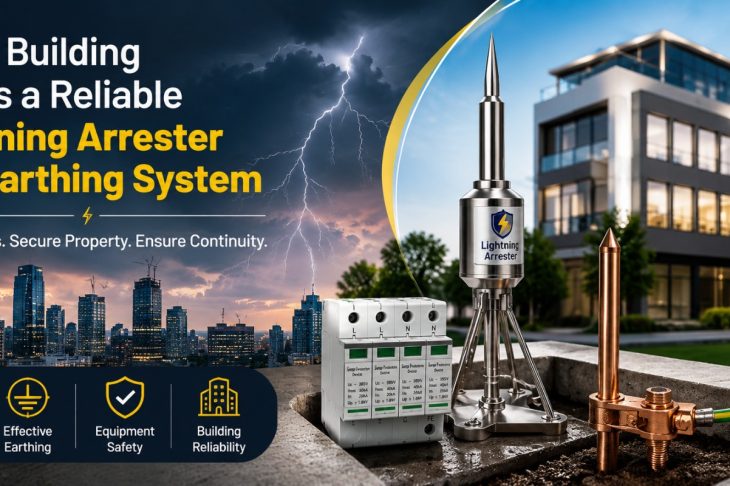
What is a Lightning Arrester?
A lightning arrester is a protective device installed at the highest point of a structure to intercept lightning strikes and safely direct the electrical current into the earth through a properly designed grounding system.
A complete lightning protection system generally includes:
- Air terminal
- Down conductors
- Earthing system
- Bonding network
- Surge Protection Devices (SPDs)
Together, these components reduce the possibility of structural damage, fire, and electrical failures caused by lightning.
What are Conventional and ESE Lightning Arresters?
Although both technologies serve the same purpose, they operate using different design principles.
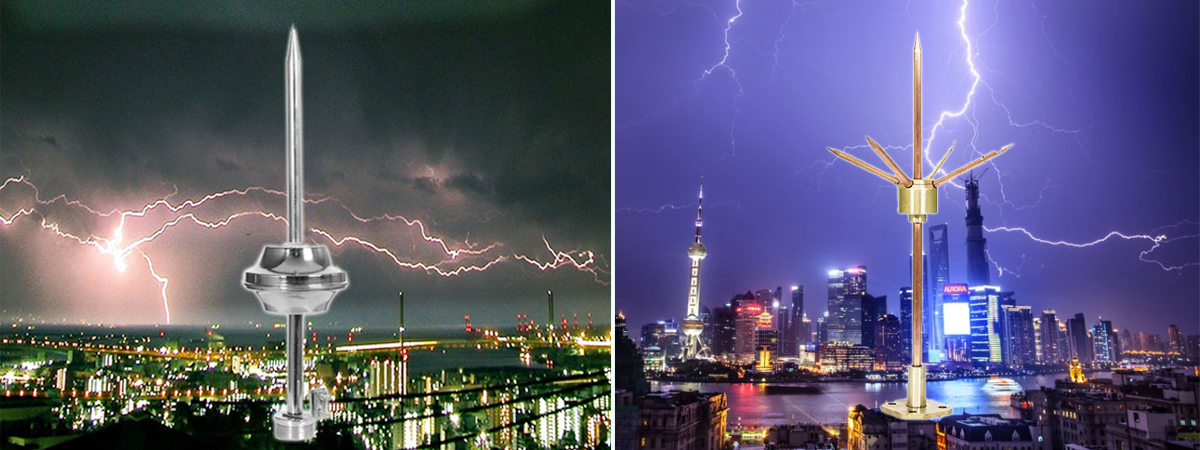
Conventional Lightning Arrester
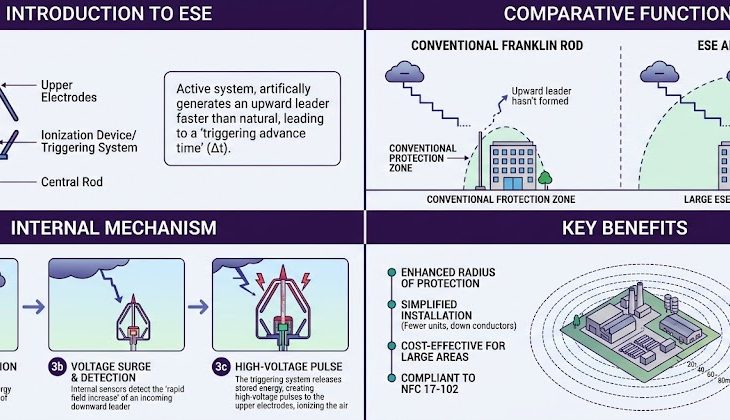
A conventional system consists of multiple air terminals connected through conductors to a grounding network. Protection is achieved using recognised design methods such as the Rolling Sphere Method, Protective Angle Method, or Mesh Method.
These systems have been used successfully for decades and remain widely adopted for residential buildings, commercial properties, and industrial facilities.
ESE Lightning Arrester
An ESE lightning arrester (Early Streamer Emission Lightning Arrester) is designed to generate an upward streamer under high electric field conditions before nearby objects naturally do. The objective is to provide an earlier interception point for a lightning discharge within its designed protection zone.
Because of its wider protection radius, fewer air terminals may be required for larger structures, making it a practical solution for many industrial applications.
Conventional and ESE Lightning Arresters: Major Differences
|
Feature |
Conventional System |
ESE System |
|---|---|---|
|
Protection Principle |
Multiple air terminals create protected zones |
Early streamer emission technology |
|
Coverage Area |
Smaller protection area |
Wider protection radius |
|
Number of Air Terminals |
Usually more |
Usually fewer |
|
Installation Complexity |
Higher for large structures |
Simpler for wide-area coverage |
|
Suitable Applications |
Homes, offices, schools |
Industries, warehouses, telecom towers, airports |
|
Maintenance |
Periodic inspection required |
Periodic inspection required |
Both systems can provide effective protection when designed, installed, and maintained according to recognised engineering practices.
Which Lightning Protection System is Better?
There is no single answer because every project has different requirements.
A conventional system is often preferred for:
- Residential buildings
- Small commercial properties
- Heritage structures
- Low-rise buildings
An ESE lightning arrester is commonly selected for:
- Manufacturing facilities
- Logistics parks
- Hospitals
- Data centres
- Large warehouses
- Solar power plants
- Telecommunication towers
The final selection should always be based on a professional risk assessment, building dimensions, environmental conditions, and applicable standards.
How is a Lightning Protection System Tested?
Even the best-designed system requires periodic inspection to ensure reliable performance.
Routine testing helps identify corrosion, loose connections, damaged conductors, or deterioration in the grounding system before they become serious problems.
1. Visual Inspection
Engineers inspect:
- Air terminals
- Down conductors
- Mechanical joints
- Clamps and fasteners
- Corrosion or physical damage
Any visible defect should be corrected immediately.
2. Earthing Resistance Test
The grounding system is one of the most critical parts of lightning protection.
During testing, engineers measure the earth resistance to confirm that lightning current can safely dissipate into the ground.
Poor earthing significantly reduces the effectiveness of any protection system.
3. Continuity Testing
Electrical continuity is checked throughout the conductor network to ensure that all components are properly connected.
Disconnected or damaged conductors can interrupt the intended current path during a lightning strike.
4. Surge Protection Device Inspection
Surge Protection Devices safeguard electrical equipment from transient overvoltages caused by lightning.
These devices should be inspected periodically to verify that they remain operational and have not reached the end of their service life.
Important Parameters During Lightning Protection Testing
A comprehensive inspection generally evaluates several performance factors.
Ground Resistance
The earthing resistance should remain within acceptable limits recommended by applicable standards and site requirements.
Mechanical Integrity
All conductors, clamps, connectors, and mounting hardware should remain secure and free from corrosion.
Electrical Continuity
The current path from the air terminal to the grounding system must remain uninterrupted.
Surge Protection Performance
SPDs should be inspected to ensure they continue protecting sensitive electrical equipment.
System Documentation
Maintenance records, inspection reports, and previous test results should be reviewed during periodic inspections.
Why Regular Maintenance Matters
A lightning protection system is not a “fit and forget” installation.
Weather exposure, corrosion, construction modifications, and ageing can reduce system performance over time.
Routine inspections help:
- Improve system reliability
- Reduce maintenance costs
- Prevent equipment damage
- Increase operational safety
- Support long-term compliance
Many organisations schedule annual inspections or follow the maintenance intervals recommended by applicable standards.
Choosing the Right Lightning Arrester Manufacturer
The performance of any lightning protection system depends not only on the product but also on engineering expertise.
When selecting a lightning arrester manufacturer, consider the following:
- Product quality certifications
- Industry experience
- Technical support
- Installation guidance
- Product testing documentation
- After-sales service
An experienced manufacturer can also recommend the most suitable solution based on your facility’s risk profile and operational requirements.
Frequently Asked Questions
What is the difference between Conventional and ESE Lightning Arresters?
The primary difference lies in their protection approach. Conventional systems use multiple air terminals to create protected zones, while ESE systems are designed to initiate an earlier upward streamer, potentially providing a larger protection area when properly engineered.
Does an ESE lightning arrester prevent lightning?
No. It does not prevent lightning. It provides a preferred interception point and safely directs the lightning current into the grounding system.
Which buildings benefit most from an ESE system?
Large industrial buildings, warehouses, airports, telecom towers, hospitals, and solar plants often benefit from wider protection coverage.
How often should a lightning protection system be tested?
Visual inspections are commonly performed annually, while detailed testing intervals depend on site conditions, local regulations, and maintenance schedules.
Can an old lightning protection system be upgraded?
Yes. Existing systems can often be upgraded after a technical assessment to improve protection and accommodate building modifications.
Conclusion
Both Conventional and ESE Lightning Arresters are designed to reduce the risks associated with lightning strikes by providing a controlled path for electrical energy to reach the ground safely. The right choice depends on factors such as building size, risk assessment, structural design, and project requirements.
Whether you choose a conventional system or an ESE lightning arrester, the most important factors remain proper engineering, quality components, professional installation, and regular maintenance. Partnering with a trusted lightning arrester manufacturer ensures reliable products, expert guidance, and long-term protection for your facility.